We are open May 6th - October 8th 2022. Please book directly with us via our website! We look forward to welcoming you at our beautiful place on Cape Cod.


Pleasant Bay on Cape Cod offers a serene kayaking experience, perfect for nature enthusiasts and paddlers of all skill levels. Nestled behind Nauset Beach, its calm waters, teeming with wildlife, provide a peaceful escape from the bustling Atlantic. Here’s what you need to know:
Plan a 2–3 day trip to explore the bay’s unique features, from sandbars and salt marshes to its vibrant biodiversity. Paddle at your own pace and discover a quieter, more intimate side of Cape Cod.
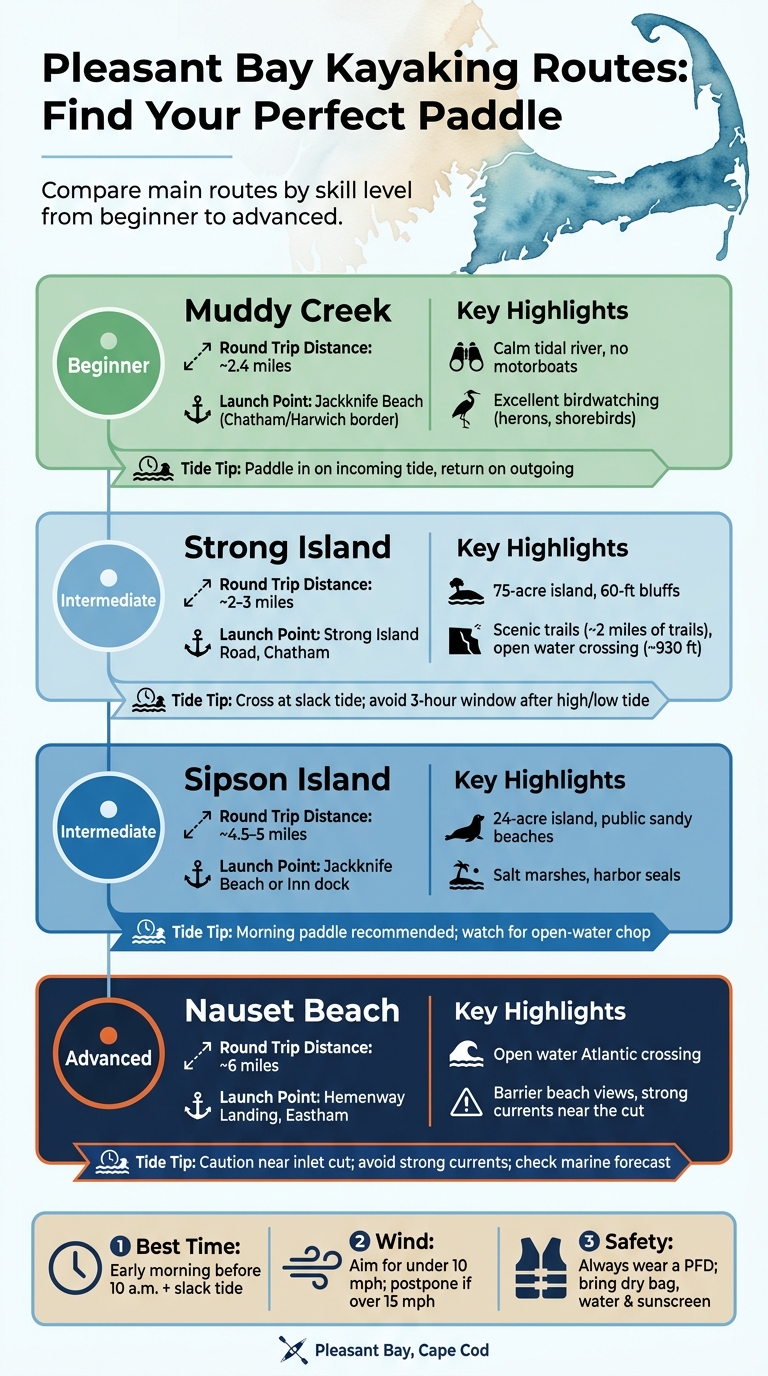
Pleasant Bay is tucked along Cape Cod's "elbow", with Nauset Beach acting as a natural shield from the open Atlantic. This barrier creates calm waters, making the bay perfect for paddling. The area is divided into two parts: the larger "Big Bay", known as Pleasant Bay proper, and the smaller "Little Pleasant Bay" to the north. Together, they make up a vast estuary filled with tidal creeks, salt marshes, mudflats, and islands. Two standout islands for paddlers are Strong Island, which spans 75 acres and features 60-foot bluffs, and Sipson Island, a 24-acre gem with sandy beaches and salt marshes. These landscapes offer a mix of scenery and challenges, making the bay a great spot for both beginners and intermediate paddlers [6][2].
Pleasant Bay’s unique layout provides paddlers with a variety of routes suited for different skill levels. Its shallow waters naturally steer larger boats into specific channels, leaving quieter areas for kayakers to explore. This creates peaceful paddling opportunities through coves and along marsh edges.
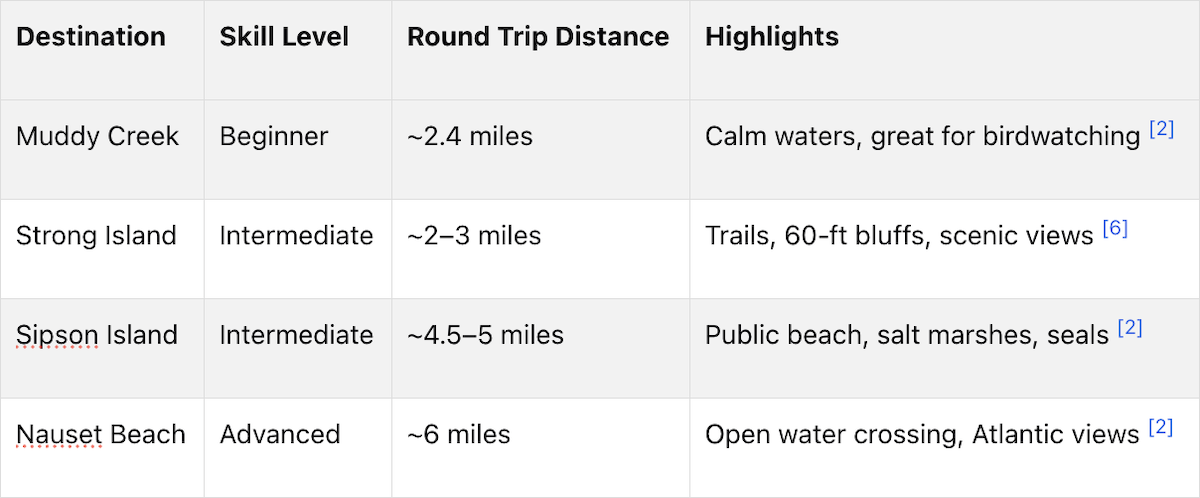
Depending on your experience, you can choose from shorter, relaxed paddles or more adventurous trips. For example, a half-day paddle might take you along the protected shoreline or into Muddy Creek, a calm tidal river free from motorized boats. If you're up for a longer journey, you could paddle to Sipson Island (a round trip of about 4.5–5 miles) or Strong Island (a 2–3 mile round trip). Here’s a quick breakdown of popular destinations:
The best time to paddle is early in the morning, ideally before 10 a.m., when the waters are at their calmest - perfect for longer routes or island crossings. Be mindful of the tides, as low tide exposes mudflats that can leave you stuck. Additionally, a new inlet formed about two decades ago has created unpredictable currents near the Atlantic openings, so caution is necessary, especially near these areas. Knowing these conditions will help you plan a safe and enjoyable paddling experience, whether you're sticking to calmer waters or venturing out to Strong Island [3].
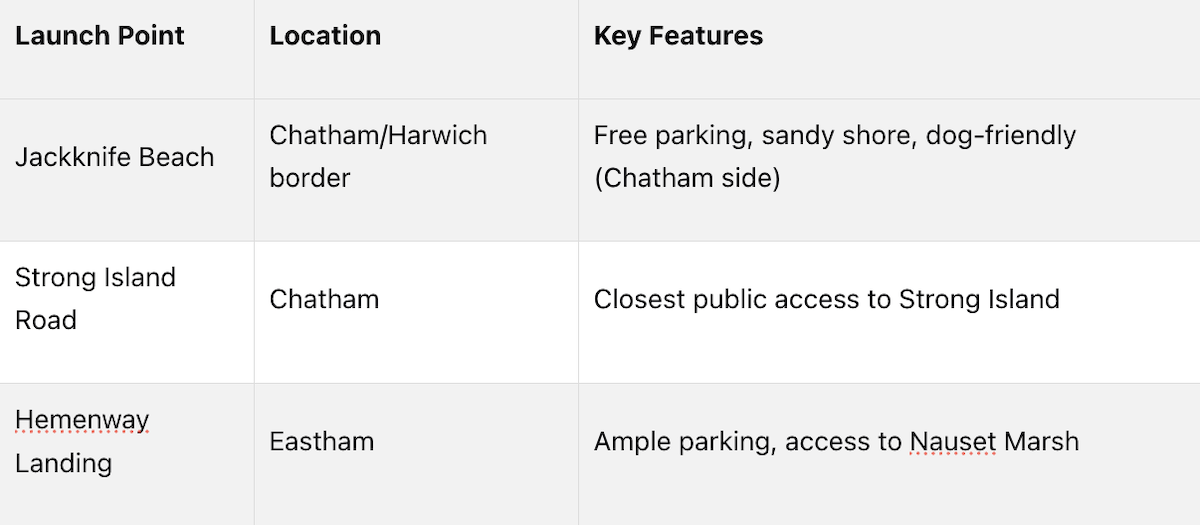
Getting onto Pleasant Bay is straightforward when you know the key spots. Jackknife Beach, located on Route 28 at the Chatham/Harwich border, is a great choice with free parking and a sandy shore that makes launching simple. If you're on the Chatham side, you can even bring your dog during summer. Just be cautious of the limited parking near the soft sand, especially during high tide when flooding is possible.
For those heading directly to Strong Island, Strong Island Road in Chatham is the closest public landing, offering the most direct access to the island. If you're starting from the northern end of the bay system, Hemenway Landing in Eastham is another excellent option. It has plenty of parking and provides easy entry into the Nauset Marsh area.
If you're staying nearby, accessing the water can be even more convenient.
Guests at A Little Inn on Pleasant Bay can enjoy unmatched convenience by launching right from the inn itself. With a private dock and pebble beach, there's no need to haul your gear through crowded parking lots. Even better, the inn offers complimentary kayaks and paddleboards, making it easy to paddle out at dawn or enjoy a peaceful sunset trip without worrying about rental shop hours.
If you're new to the bay or just want a relaxing outing, stick close to the shoreline for a calm and protected paddle. This is a great way to ease into the experience while enjoying the scenic views.
For those looking for a bit more adventure, try the crossing to Strong Island, which sits about 930 feet off Eastward Point. The round trip is 2–3 miles, making it a manageable challenge for intermediate paddlers. Keep in mind that open water conditions can change quickly, with wind and choppy waves often picking up later in the day. For the smoothest paddle, aim to head out in the morning [2].
With these launch points and routes, Pleasant Bay offers something for everyone, from serene shoreline paddles to more adventurous crossings.
Tides are a key factor when planning a paddle on Pleasant Bay. As a shallow estuary, the bay reveals extensive sandbars and mudflats at low tide, transforming areas that were previously navigable into tricky, shallow terrain. The best time to paddle is during slack tide - the moment when the water pauses briefly at the posted high or low tide before reversing direction. These calm conditions make for an easier, more enjoyable paddle.
"The current will move the fastest 3 hours after the day's posted high or low tides. It's much easier to paddle at slack tide, which occurs at the posted high or low tide time, when the current stops moving and changes direction." - capebeachdog [2]
If you're heading toward Strong Island or Nauset Beach, timing your trip with an outgoing tide can give you a helpful push out, while the incoming tide can make your return smoother. For routes like Muddy Creek, paddling in with the incoming tide and heading back on the outgoing tide keeps the journey manageable. Understanding these tidal patterns is especially important for more ambitious trips, such as crossing to Strong Island.
Paddling to Strong Island is an adventure worth taking, but the open channel between the mainland and the island demands extra care. The tidal currents in this area can pick up speed quickly, and even if conditions seem calm at launch, they can become choppy in open water. To avoid the strongest currents in the channel, plan your crossing outside the three-hour window following a high or low tide [2]. It's also a good idea to bring a dry bag for essentials like your phone and keys whenever you're venturing into open water.
Keep in mind that seals are often spotted near Strong Island and along the southern part of the bay. To stay safe, avoid the "cut" - the inlet connecting the bay to the Atlantic - where currents are strongest, and shark activity, though rare inside the bay, is slightly more of a concern.
"The waters around the island are shallow with strong tides and currents in the channel. Kayakers and canoers should use extreme caution." - Chatham Conservation Foundation [7]
While tides are essential, weather conditions are equally important for a smooth experience on the bay. Once you've planned around the tides, make sure the weather is favorable too. Wind speed and direction are critical on open water - a headwind of 10–15 mph on your return can make the trip much harder than expected. Check the National Weather Service marine forecast for Nantucket Sound before heading out. For a comfortable paddle, aim for wind speeds under 10 mph. If winds exceed 15 mph, stick close to shore or consider postponing your trip.
Safety should always come first. Wear a PFD, bring plenty of water, and apply sunscreen before launching. The bay's open waters offer little shade, and the sun's reflection can intensify its effects. Early morning paddles are often the best choice - they're cooler, typically calmer, and provide excellent light for spotting wildlife before the winds pick up.
The calm, shallow waters of the bay create excellent conditions for paddling and support a thriving array of wildlife throughout the year.
Pleasant Bay is a standout destination for birdwatching, especially from a kayak. As you paddle, you might spot great blue herons wading gracefully, ospreys diving from above, and egrets lingering along the marsh edges. Timing is key - mid-tide (a 2–3-hour window) reveals sandpipers, plovers, and godwits feeding on mudflats, while early morning paddles often reward you with sightings of warblers and flycatchers just after sunrise. For even more variety, head to Jackknife Cove, where Muddy Creek meets the bay, and enjoy views of shorebirds and waterfowl.
Late summer and early fall bring an extra treat: monarch butterflies. These delicate creatures drift along the shoreline during their southward migration, adding a touch of magic to your paddling journey.
While the surface of the bay is alive with birds and butterflies, the underwater world is just as dynamic.
The bay’s eelgrass beds and sandbars are bustling with life beneath the water. Schools of small fish dart through the shallows, while striped bass pass through during the warmer months. As the weather cools - from fall through early spring - harbor seals make their presence known, hauling out on exposed sandbars to rest. These moments offer a peaceful and intimate look at the bay's marine life.
However, it’s important to stay cautious. Avoid the southern "cut" near North Beach, where strong currents can pull kayaks toward open water [2].
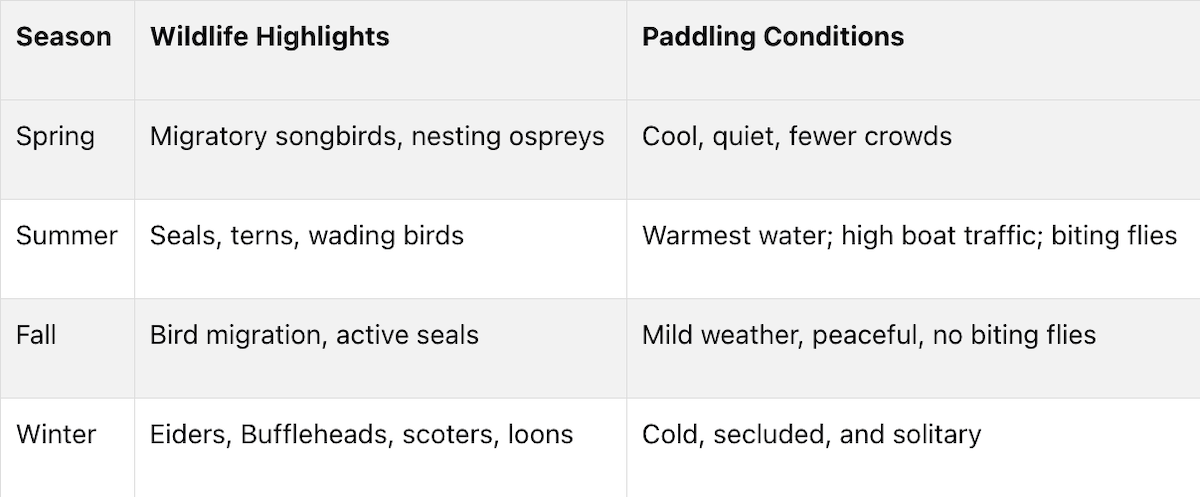
The bay’s wildlife and paddling conditions shift dramatically with the seasons, making each visit a unique experience. Spring is quiet and cool, with migratory birds returning and fewer paddlers around. Summer, on the other hand, brings warmer waters and a surge in marine activity. However, the season also comes with some challenges, like increased motorboat traffic and the pesky green head flies.
"Green head flies can also be an irritant at that time of year [summer] so we prefer to go in either early summer (Before July 4th) or in the fall." - Cape Cod for Couples [1]
Fall is often considered the best time to paddle on the bay. The flies are gone, boat traffic drops significantly, bird migration is in full swing, and the light reflecting off the water is simply stunning. If you can plan your trip for September through mid-October, you’ll likely experience some of the most enjoyable paddling conditions of the year.
When it comes to kayaking, timing is everything. The most magical moments on Pleasant Bay happen during sunrise, the slack tide, or those golden hours just before sunset. Staying on the bay eliminates the delays of public launches, giving you the freedom to paddle whenever conditions are ideal. This kind of flexibility means you can make the most of your time on the water, whether it’s a serene dawn paddle or a peaceful sunset return.
Staying on the bay offers unmatched convenience, and A Little Inn on Pleasant Bay is the perfect example. This boutique 9-room B&B in South Orleans gives guests direct access to kayak launches right from the property. Imagine stepping outside your room and being on the water within minutes. Plus, being right on the bay allows you to keep an eye on conditions and plan your paddle around the tides.
Before or after your kayaking adventures, you can enjoy the inn’s European-style breakfast, featuring smoked fish, specialty cheeses, cured meats, and Iggy's breads. Breakfast is served on the bay-facing patio or in the garden courtyard, setting the tone for a relaxing day ahead.
"Served in the lush garden courtyard or the bay-facing patio, our breakfast is truly an 'experience' and a great way to indulge before a day of exploration." - A Little Inn on Pleasant Bay [4]
The inn's charm hasn’t gone unnoticed - it was named the 2023 LuxLife Hospitality Awards winner for "Most Charming Bed & Breakfast in MA" [4].
With this kind of convenience, you can plan a kayaking trip that flows with the natural rhythms of Pleasant Bay. Here’s a 2- to 3-day itinerary blending short paddles with more adventurous crossings:
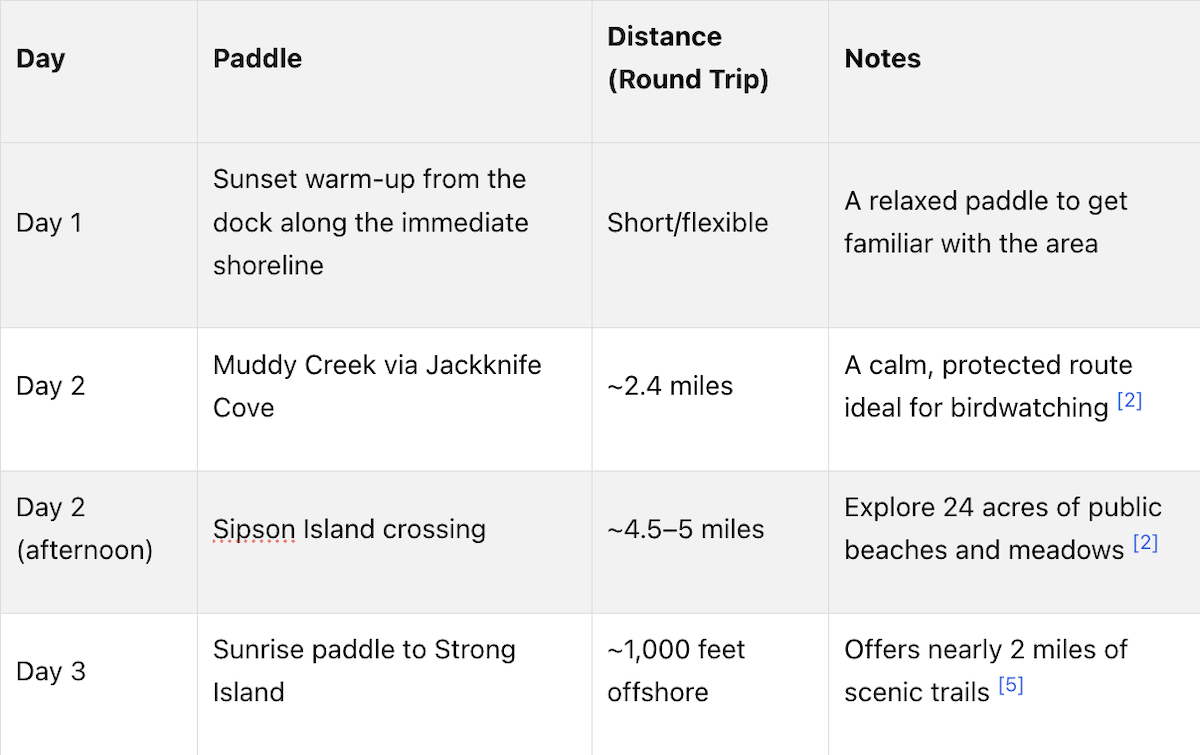
Start on Day 1 with a gentle paddle from the dock to ease into your surroundings. By Day 2, you’ll be ready for the 2.4-mile round trip to Muddy Creek, a peaceful area free of motorboats and perfect for spotting herons and other shorebirds. That afternoon, tackle the Sipson Island crossing, which provides a bit more open-water experience and a chance to explore its beaches and meadows. Finally, on Day 3, take an early morning paddle to Strong Island, located about 1,000 feet offshore from North Chatham. With nearly 2 miles of trails, it’s the ideal way to end your trip before checkout [5].
For an easier return paddle, remember to follow the 50/90 tidal rule [2].
With the launch options and tidal insights in mind, it’s time to fine-tune your plans to match conditions with your chosen route.
Before heading out on Pleasant Bay, make sure to check the tides, keep an eye on the wind direction, and choose a route that aligns with your skill level. For beginners, the calm and sheltered waters of the 2.4-mile Muddy Creek route offer a perfect introduction. If you’re more experienced, consider exploring Sipson Island’s sandy beaches on a 4.5–5-mile round trip. For seasoned paddlers looking for a challenge, the 6-mile round trip to Nauset Beach provides access to an Atlantic-facing shoreline - just be mindful of areas with strong currents [2]. And don’t forget the 50/90 rule: always account for wind direction, as a tailwind on your way out can turn into a tough headwind on your return.
Staying close to the bay makes planning and paddling much easier. A Little Inn on Pleasant Bay offers a convenient base with complimentary kayaks, a private dock, and helpful concierge services for tide checks and route suggestions. This setup allows you to paddle at sunrise, return for a relaxed breakfast on the patio overlooking the bay, and head back out when conditions improve - all without the hassle of traffic or crowded parking areas.
Pleasant Bay reveals its beauty slowly, rewarding those who take the time to explore. From a heron gliding above the eelgrass to a monarch butterfly drifting over the dunes, every moment on the water feels like a discovery. The shifting light across the bay in the late afternoon adds another layer of magic. To truly soak in the experience, plan for a two- to three-day trip. With thoughtful preparation and the convenience of staying at A Little Inn on Pleasant Bay, your time on the water will be as smooth and enjoyable as the bay itself.
To keep your journey safe, stick close to the shoreline to steer clear of open water and unpredictable conditions. If you're just starting out, head to calm spots like Jackknife Cove or try launching from the private dock at A Little Inn on Pleasant Bay. Make sure to check tide schedules beforehand to avoid shallow mudflats or strong currents. For less experienced paddlers, it’s best to follow coastal routes instead of attempting direct crossings to islands.
Plan your paddle trip around high tide to steer clear of shallow waters and mudflats. Aim to launch during slack tide, the period when currents are at their calmest - this typically occurs about three hours after high or low tide. Avoid heading out during heavy rain, dense fog, thunderstorms, or strong onshore winds, as these conditions can drastically reduce visibility and make navigation dangerous.
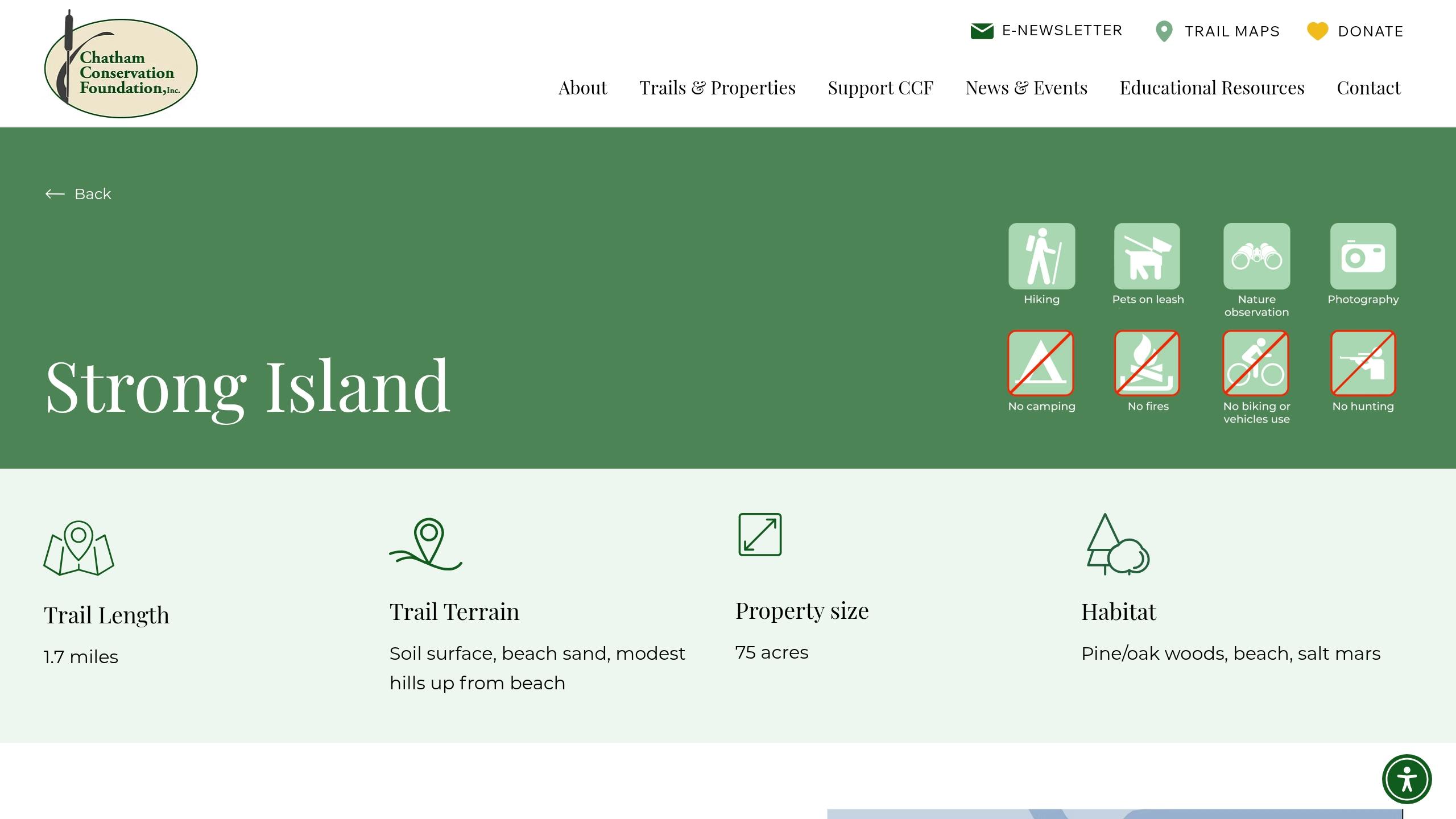
Safety and care for nature are essential when heading to Strong Island. Always wear a life vest, review tide schedules, and evaluate water conditions before setting out. Once you arrive, make sure to pack out all trash, keep pets leashed, and stick to marked trails to help preserve the local ecosystem. Be mindful of the private three-acre residential area, and note that camping and fires are not allowed.
If you're looking for a peaceful and personal Cape Cod experience, now's the time to book your stay at A Little Inn on Pleasant Bay. With its quiet setting, friendly hosts, and small seasonal touches that make a big difference, it’s a great place to relax and enjoy the best bed and breakfast in Cape Cod. Whether you’re planning a weekend getaway or a longer break, don’t wait too long—anytime is the best time to visit, and rooms fill up fast.


