We are open May 6th - October 8th 2022. Please book directly with us via our website! We look forward to welcoming you at our beautiful place on Cape Cod.


Shingle-style architecture defines Cape Cod's coastal charm with its weathered cedar shingles, low profiles, and practical designs tailored for seaside living. Emerging in the late 19th century, this style blends simplicity with functionality, featuring steep roofs, multi-paned windows, and open layouts. Its origins trace back to early New England homes, evolving into a hallmark of American summer retreats. Today, modern interpretations incorporate larger windows, advanced materials, and contemporary comforts while preserving the style's timeless appeal. Whether it's a historic cottage or a new build, shingle-style homes remain iconic symbols of Cape Cod's architectural identity.
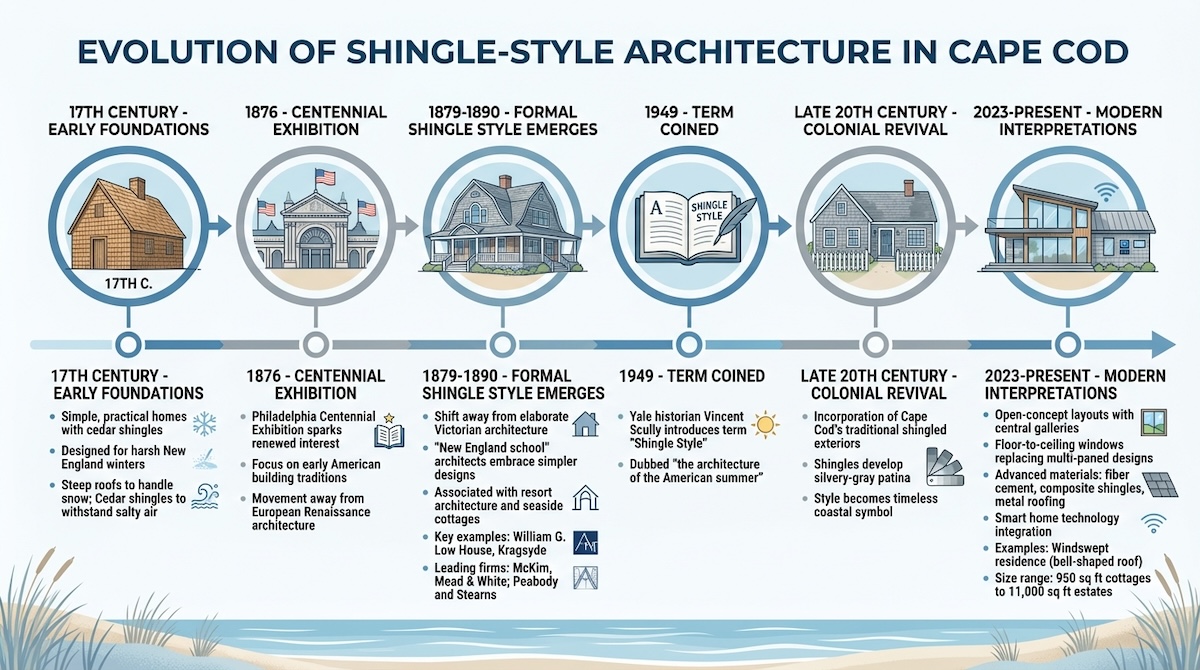
Shingle-style architecture took shape between 1879 and 1890, marking a shift away from the elaborate designs of Victorian architecture. This style reflected a desire among architects of the "New England school" to embrace simpler, more natural designs tied to America's colonial past, rather than the grandeur of European aesthetics [2][8].
The 1876 Centennial Exhibition in Philadelphia played a key role in this movement, sparking renewed interest in early American building traditions [3][7]. Architects Albert Winslow Cobb and John Calvin Stevens captured this sentiment in 1888, criticizing European Renaissance architecture:
"In truth there is little to commend in any of the Renaissance architecture of continent Europe; architecture inspired by the admiration for tyrants for the work of their archetypes in the splendid, corrupt days of ancient Rome" [3]
Shingle style became particularly associated with resort architecture, especially large seaside cottages for affluent clients along New England's coastline. Leading architectural firms like McKim, Mead & White and Peabody and Stearns created some of the most iconic examples, including the William G. Low House (1886–1887) in Bristol, Rhode Island, and Kragsyde (1882–1885) in Manchester-by-the-Sea, Massachusetts [2][7]. These summer homes, often unheated, relied on wooden shingles that naturally adapted to seasonal changes by expanding and contracting [3].
The term "Shingle Style" itself was introduced in 1949 by Yale architectural historian Vincent Scully, long after the movement had left its mark on American coastal architecture [2][3]. Cape Cod, with its longstanding building traditions, became a natural home for this style, further showcasing its suitability to the coastal environment.
The Colonial Revival movement that followed the Centennial encouraged architects to incorporate Cape Cod's traditional shingled exteriors. These shingles, which had been used for over two centuries, proved highly effective against the region's harsh winters and coastal weather [2][7]. Left untreated, the wood developed a silvery-gray patina that harmonized beautifully with the surrounding landscape, making the style feel timeless and deeply connected to its setting [1].
Cape Cod shingle-style homes are instantly recognizable, thanks to their cedar shingles that cover both walls and roofs, creating a seamless exterior. Over time, exposure to salt air gives these shingles a silvery-gray patina, a hallmark of this architectural style [1][4]. Interestingly, some architects accelerate this weathered look by dipping cedar shakes in buttermilk before installation, achieving a grayish tone right from the start [7].
Rooflines play a key role in defining the style. Traditional homes often feature steeply pitched gabled roofs, designed to handle heavy snow during harsh New England winters [4]. Other variations include gambrel and hip roofs that emphasize a horizontal layout. Modern designs push these boundaries even further. For instance, the Windswept residence in Osterville, Massachusetts, completed in 2023 by architect John DaSilva, pairs a dramatic bell-shaped roof with curved red cedar cladding and Alaskan yellow cedar sidewalls [10].
The proportions and massing of these homes typically stay low and symmetrical, with most structures standing one or one-and-a-half stories tall. Classic layouts include the "Full Cape", with a central front door flanked by two windows on each side, and the "Half Cape", where the door is offset with two adjacent windows [1][4]. Colonial-era homes were modest, often anchored by a large central chimney that distributed heat throughout the house. While modern designs often move the chimney to the side, the overall silhouette remains true to its roots [1][6].
Once the exterior’s cohesive look is established, the finer details - like windows, doors, and porches - enhance both aesthetics and functionality.
Traditional shingle-style homes are known for their windows, often featuring small, multi-paned designs like 9-over-6 or 6-over-6 patterns. These were originally crafted to minimize heat loss during frigid winters [1][4]. Shutters, which once served a practical purpose, now add to the home’s cottage-like charm. Modern versions, however, have embraced larger windows, floor-to-ceiling glass walls, and sliding doors to flood interiors with natural light and highlight coastal views.
Dormers are another defining element, breaking up steep rooflines while adding light, ventilation, and extra living space to the upper levels. Popularized in the early 20th century, dormers allowed homes to expand without altering their characteristic silhouette [1][9].
While porches were rare in the original 17th-century designs, they have become a key feature in modern interpretations. Today, you’ll find everything from welcoming front porches to screened-in wings and elevated "treehouse" porches that blur the line between indoor and outdoor living. A standout example is the Cottage at Fulling Mill Brook on Martha’s Vineyard, designed by John and Sharon DaSilva, which features an "airborne porch" that combines the feel of a treehouse with the charm of a Carpenter Gothic cottage [5].
While the exterior retains its historic appeal, the interiors of modern shingle-style homes embrace open layouts and creative ceiling designs, offering a balance of tradition and contemporary comfort.
Open floor plans dominate today’s designs, replacing the small, compartmentalized rooms of traditional Cape Cod homes. Early layouts often included a "keeping room" that served multiple purposes like cooking and gathering. In contrast, modern interiors remove walls to create flowing spaces, making the home feel like a unified whole rather than a series of separate rooms [1][4][7].
Ceiling treatments add a layer of sophistication and visual interest. Vaulted ceilings often appear in family rooms, while coffered ceilings enhance living areas. Unique features like "handkerchief domes" bring character to spaces with limited vertical height. Architect John DaSilva explains:
"The domes pop up in the center but also hang down at the perimeter... they add character in spaces where there was limited ability to go higher" [10].
The Windswept residence exemplifies this with its seashell-curved grand staircase and a two-story octagonal library tower [10].
Natural materials and coastal themes are central to the interiors, creating a warm and inviting atmosphere. Oak and pine floors, paired with wicker furniture and period pieces, reinforce the home’s connection to its seaside surroundings [6]. The color palette often mirrors the ocean, featuring shades like sage green, aquamarine, and buttery beige [6]. Despite their rustic charm, these homes don’t skimp on modern amenities, incorporating features like smart home technology and advanced insulation [1].
Today's modern shingle-style homes in Cape Cod have evolved to embrace open-concept layouts, featuring central galleries and seamless transitions. This is achieved with thoughtful design elements like varied ceiling heights and cased openings, which create a sense of flow throughout the space.
While traditional multi-paned windows were once a hallmark of this style, they’ve largely been replaced by expansive, floor-to-ceiling glass. These modern windows not only maximize natural light and showcase coastal views but also incorporate high-performance insulation and energy-efficient HVAC systems, making them as practical as they are beautiful.
Material advancements have also played a big role in adapting these homes to Cape Cod’s coastal environment. Many architects now opt for durable options like fiber cement, composite shingles, or metal roofing, which stand up well to moisture and rot while maintaining a classic coastal aesthetic. For those who prefer natural materials, Alaskan yellow cedar or treated red cedar is often used to ensure uniform coloring and long-lasting appeal.
Modern technology is seamlessly integrated into these updated designs without detracting from their historic charm. Advanced systems for lighting, climate control, and security are now standard features. Architect John DaSilva of Polhemus Savery DaSilva captures this balance perfectly, stating:
"We 'recall' the past, we don't literally re-create it" [5]
These updates allow modern shingle-style homes to honor their roots while embracing contemporary living.
Recent projects across Cape Cod showcase how the shingle style has evolved, blending historic charm with contemporary elements. One standout example is the Windswept residence in Osterville, completed in September 2023 by John DaSilva. Spanning 5,191 square feet, the home features a striking bell-shaped roof clad in red cedar and Alaskan yellow cedar sidewalls. Unique design elements like "eyebrow" porch openings and a two-story octagonal tower - housing a library and breakfast room - add to its character. As DaSilva explains:
"The style is relatively loose and malleable, so you can express shapes and geometry and images rather freely because the house is wrapped in a membrane of wood shingles, which unifies disparate elements" [10]
Another notable project, completed in July 2023 by Patrick Ahearn Architect, transformed an early-1900s shingle-style home in Osterville for a family of five. The renovation replaced a cluttered layout with a central gallery and added modern features like a carriage house, pool, and cabana. Interior details, including green lacquer millwork and hydrangea blue accents, give the home a fresh feel while respecting its historic roots.
Morehouse MacDonald and Associates took a different approach, distilling the shingle style into a minimalist form. One of their coastal homes combines white cedar shingles with black steel doors and windows, creating a clean, cohesive look. Features like concealed roof gutters and fumed white oak wide-plank flooring add to the home’s understated elegance.
Modern shingle-style homes in Cape Cod come in all sizes, from cozy 950-square-foot cottages to sprawling 11,000-square-foot estates [5]. Regardless of scale, the key lies in thoughtful details - like oversized shingles and carefully proportioned muntins - that ensure the design feels balanced and visually appealing. These homes continue to reinterpret a beloved architectural style for today's world.
Shingle-style architecture has been a defining feature of Cape Cod's hospitality scene since the late 19th century, when affluent families began building seaside cottages in the resort towns of the Northeast. This architectural style remains a hallmark of the region, offering visitors what architectural historian Vincent Scully described as "the architecture of the American summer" [3]. With its weathered cedar exteriors, open layouts, and inviting porches, shingle-style design creates a perfect blend of relaxation and understated luxury.
The charm of this style lies in its effortless connection to the coastal environment. Unlike the ornate and rigid Victorian designs of the same era, shingle-style homes are "beautiful in their subtlety", blending into the natural landscape with ease [3]. As the cedar shingles age and weather, they further harmonize with their surroundings, embodying a sense of authenticity that resonates with modern travelers. This timeless aesthetic has become a cornerstone of Cape Cod’s hospitality, as demonstrated by properties like A Little Inn on Pleasant Bay.
A Little Inn on Pleasant Bay is a shining example of how shingle-style architecture elevates the guest experience in Cape Cod. This property captures the essence of the style in a contemporary coastal setting. Architect John DaSilva perfectly encapsulates the appeal of such spaces, stating:
"A summer house is more a frame of mind than a seasonal place. It's the embodiment of a relaxed attitude, that's what it is." [5]
Featuring nine thoughtfully designed rooms, the inn embraces natural materials, open layouts, and large windows that frame stunning views of Pleasant Bay. These elements honor Cape Cod’s architectural heritage while delivering modern luxury.
The inn’s design details enhance both comfort and character. Expansive porches and a private dock invite guests to enjoy the seamless indoor–outdoor living that shingle-style homes are known for. Meanwhile, the weathered cedar exterior blends effortlessly with the coastal surroundings. Inside, the open spaces and fine craftsmanship are complemented by modern touches like spa-inspired bathrooms and premium linens. This thoughtful combination of historic charm and contemporary amenities reflects the latest trends in Cape Cod architecture - paying homage to the past without feeling outdated.
Shingle-style architecture does more than catch the eye; it creates an immersive experience. Often described as the "quintessential American summer house", this design style evokes nostalgic associations with New England beach vacations and carefree retreats [11]. Signature features, such as curved "eyebrow" porch openings and flowing rooflines, add a distinctive character that guests find both memorable and inviting [10].
Beyond its aesthetic appeal, the style offers practical advantages. Open floor plans and large windows flood interiors with natural light and showcase the surrounding coastal beauty. These features, combined with luxury amenities, make high-end shingle-style properties highly desirable. For example, the Stone House in Kennebunkport commands rates of $21,000 per week [3], highlighting the premium value associated with this timeless design. By balancing historical charm with modern expectations, shingle-style architecture continues to play a vital role in Cape Cod’s hospitality, offering guests an experience that feels both rooted in tradition and attuned to contemporary luxury.
Shingle-style architecture has been a cornerstone of Cape Cod's identity since the 17th century, evolving from simple, practical homes into the elegant coastal retreats we see today. Originally designed to endure the harsh New England winters - with steep roofs to handle snow and cedar shingles to withstand the salty air - this style transformed in the late 19th century into what became known as "the architecture of the American summer" [13]. This shift mirrors Cape Cod's journey from modest fishing communities to sought-after vacation destinations.
What makes this architectural style so enduring is its ability to evolve while staying true to its roots. Architect Ross Sinclair Cann explains that "the style succeeds because it has no heavy stylistic rules" [13], allowing it to adapt effortlessly to modern needs while retaining its classic charm. The weathered cedar shingles that blend seamlessly with the landscape, the flowing rooflines, and the focus on connecting indoor and outdoor spaces continue to appeal to those drawn to the natural beauty of the coast.
This timeless appeal has also been embraced by Cape Cod's hospitality industry. Shingle-style properties not only capture the aesthetic of the region but also create memorable experiences. For instance, A Little Inn on Pleasant Bay exemplifies how this architectural tradition remains relevant, offering guests a true sense of New England’s coastal heritage.
Architect Robert B. Kinlin notes, "this versatile style can outlast any latest architectural trend, making it a timeless piece of history in which you can make years of memories" [12]. Whether you're exploring historic cottages in Chatham or enjoying a stay in a modern shingle-style retreat, you're engaging with a tradition that continues to define Cape Cod’s character and charm.
A classic shingle-style Cape Cod home stands out with its low, wide profile that harmonizes beautifully with its surroundings. Hallmark features include weathered wood shingles, asymmetrical or curving roofs, large multi-pane windows, and central chimneys. These homes prioritize a natural, handcrafted look that feels timeless. While modern designs might incorporate larger windows and open floor plans, the defining elements - like the iconic shingle siding and strong connection to the coastal environment - remain at the heart of their charm.
Cedar shingles and shakes stand out for their durability in salty coastal air, lasting over 25 years when installed correctly. Their natural resistance to harsh coastal weather makes them a reliable choice. Another strong contender is metal roofing, which resists salt corrosion effectively and can last between 40 and 70 years with proper upkeep. Both options are well-suited for coastal settings.
To give a shingle-style home a modern twist while keeping its timeless appeal, aim for a mix of classic and updated elements. Retain iconic features like shingle siding, steep gabled roofs, and irregular facades, but introduce modern upgrades such as energy-efficient windows, open-concept layouts, and smart home features. Thoughtful design choices - like maintaining cohesive color schemes and preserving the roof's original silhouette - can improve the home's usability while honoring its historical essence.
If you're looking for a peaceful and personal Cape Cod experience, now's the time to book your stay at A Little Inn on Pleasant Bay. With its quiet setting, friendly hosts, and small seasonal touches that make a big difference, it’s a great place to relax and enjoy the best bed and breakfast in Cape Cod. Whether you’re planning a weekend getaway or a longer break, don’t wait too long—anytime is the best time to visit, and rooms fill up fast.


