We are open May 6th - October 8th 2022. Please book directly with us via our website! We look forward to welcoming you at our beautiful place on Cape Cod.


Slow travel on Cape Cod means doing fewer things, staying in one area longer, and letting the day follow the tide, light, and weather instead of a packed plan.
If I had to sum up the article in a few lines, it’s this:
The piece focuses on the Lower Cape, mainly Orleans, Chatham, Skaket Beach, and Pleasant Bay. The main idea is simple: Cape Cod works well for this kind of trip because the setting does some of the pacing for you. Tides shift by the hour. Marsh light changes through the day. Harbor traffic moves on its own schedule. And for many Northeast travelers, it’s within a half-day drive, which cuts out airport stress and makes a long weekend more doable.
A few facts stand out right away:
What does that look like in practice?
The article’s point is not “see more Cape Cod.” It’s “feel more of it.” And in this case, that means giving more time to one shoreline, one town center, and one place to stay.
In other words: Cape Cod fits slow travel best when I stop trying to cover the whole map and let one part of it fill the day.
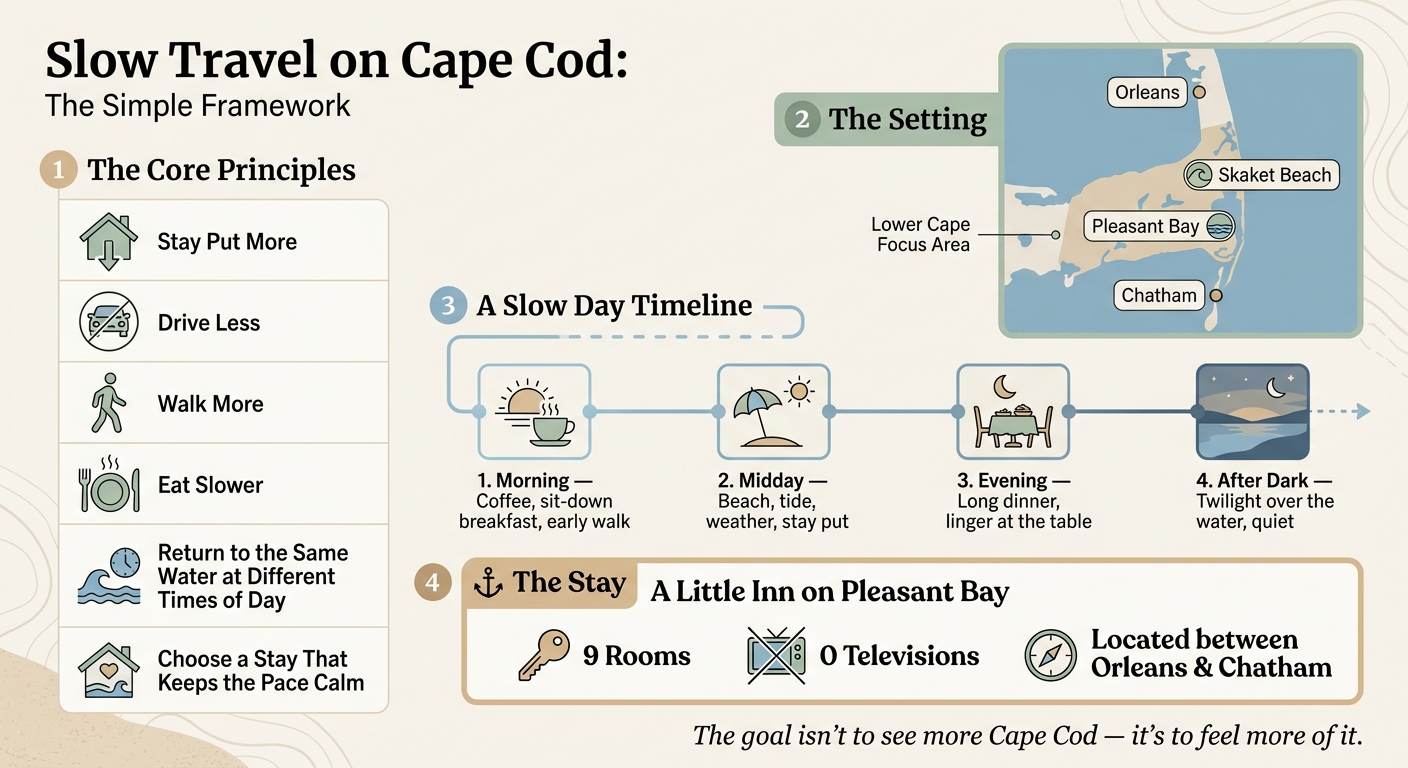
The Lower Cape gives the day room to stretch out. Its landscape moves on its own timing: tidal flats, marsh light, and working harbors keep drawing your eye back without demanding anything from you. You feel that rhythm most in the water, the shifting light, and the village centers.
On Cape Cod, the tides are the most honest clock. At Skaket Beach in Orleans, low tide pulls far back and reveals acres of tidal flats and shallow pools. That shift gives the day a natural shape. Morning fog blurs the marsh edges, and by noon the whole view feels different. At sunset, light slides across the tidal pools and marsh grass. It’s the kind of scene that makes you stop and look a little longer.
A long wooden bridge stretching across marsh grass and tidal creeks - salt air, distant gulls, the sound of the tide - creates a calm that's becoming increasingly rare.
Working harbors add another kind of motion. Weathered docks, oyster boats, and fishing vessels keep to their own schedule, and that has a way of changing yours too. Instead of pushing through the day, you find yourself slowing to match what’s in front of you.
Orleans and Chatham both work well on foot. When you’re not circling for parking or checking the time, you start noticing the shops, galleries, and cafes that make unplanned stops worth it. Less driving, fewer transitions, more time spent in one place.
Chatham’s Main Street is compact and easy to walk. Orleans pairs town amenities with fast access to bayside flats like Skaket Beach. Put together, they make it simple to spend more of the day walking, staying near the water, and letting the clock fade into the background.
Those conditions shape the day itself: later starts, longer stops, and fewer reasons to rush.
The difference isn't how much you squeeze in. It's how long you stay. On the Lower Cape, that slower rhythm shows up first in how you wake up, eat, and get around.
A slow Cape Cod morning doesn't begin with a packed plan. It begins with coffee before the roads get busy, a breakfast you actually sit and enjoy, and maybe a walk before the heat settles in. When you walk, you notice more.
When you're not rushing from one place to the next, small things start to stand out: the light on the harbor, the feel of the village, the way the morning eases into the day. There's space for the day to settle before anything is asked of it.
Vacation can make people want to keep moving. On the Lower Cape, it's often better to stay put. Head out when the light is soft and the beach is quiet. The flats can look completely different from how they looked at sunrise, and going back to the same stretch of shoreline at a different tide can feel like its own small discovery.
A relaxed dinner changes the whole mood of the evening and lets the meal last a while. After that, not much needs to happen. Twilight over the water. The sound the bay makes when the wind drops. The kind of quiet that settles in after dark.
That pace is a lot easier to keep when your stay gives you room for it.
Cape Cod already runs on a slower rhythm, so the drive there can feel like part of the reset. For travelers from Boston, New York, Connecticut, and Rhode Island, it sits in a sweet spot: close enough for a long weekend, but far enough to feel like a genuine break.
And because there’s no flight to catch, the trip starts on your terms. No airport lines. No fixed arrival stress. The decompression can begin right in the car.
That easy access is a big reason slow travel Cape Cod makes sense for Northeast travelers. As you head east, the scenery starts to shift. Dunes and salt marshes replace the usual view, and the Cape feels farther from everyday life than the miles would suggest.
A few easy days in one place can do more for you than a longer trip spent rushing around. Once you get there, the best part is how fast the mood of the Cape starts to replace the pace of the road.

A Little Inn on Pleasant Bay makes slow travel in Cape Cod feel less like an idea and more like the whole point of the trip: nine rooms, no televisions, and breakfast on a bay-facing patio between Orleans and Chatham. [2]
Breakfast alone can slow you down in the best way. Smoked salmon, prosciutto, cheeses, jams, and local Iggy's breads make it easy to stay at the table longer than you meant to. As the inn puts it:
"Served in the lush garden courtyard or the bay-facing patio, our breakfast is truly an 'experience' and a great way to indulge before a day of exploration." [1]
Without televisions pulling attention in a dozen directions, mornings drift toward books, magazines, or board games instead. The day starts with the bay, not a screen.
Beyond breakfast, Pleasant Bay shapes the pace of the day. The dock and the water carry that same easy rhythm outside, and while the inn sits near Chatham and Orleans, it still feels removed from the rush.
That shows up in small moments: walking without much of an agenda, watching the tide shift, sitting on the patio a little longer than planned. Some places simply make room for slow travel. This one helps set the rhythm for it.
The stay follows the bay instead of pushing against it. Here, the water, the dock, and the patio decide the pace.
Plan a slow travel Cape Cod trip by picking one home base, skipping the urge to see it all, and letting your days move with the Cape’s own rhythm. A Little Inn on Pleasant Bay, set between Orleans and Chatham, works well for this kind of stay, with bay views and no televisions.
Let tides and light shape the day instead of a packed schedule. Walk or bike when you can, leave space for unplanned stops, and think about visiting in spring or fall for a calmer, more restful pace.
The best time for slow travel on the Lower Cape is during the shoulder seasons - spring and fall - when the pace eases and the crowds thin out.
Early May can feel especially restorative. The landscape starts to bloom, the weather stays mild, and the trails are still quiet.
From mid-September through November, the coast shifts into a calmer, more reflective rhythm. Beaches feel peaceful, mornings are still, and places like A Little Inn on Pleasant Bay become even more restful.
Go deeper, not farther. Instead of trying to see the whole peninsula, stay rooted in one area, like Orleans. You’ll spend less time driving and more time settling in.
Let the morning move at its own pace. Have a long breakfast, take a walk by the shore, and then pick just one or two places to focus on for the day. Let the tides, the light, and the coastline shape the rhythm. A stay at A Little Inn on Pleasant Bay fits that kind of trip naturally.
If you're looking for a peaceful and personal Cape Cod experience, now's the time to book your stay at A Little Inn on Pleasant Bay. With its quiet setting, friendly hosts, and small seasonal touches that make a big difference, it’s a great place to relax and enjoy the best bed and breakfast in Cape Cod. Whether you’re planning a weekend getaway or a longer break, don’t wait too long—anytime is the best time to visit, and rooms fill up fast.


