We are open May 6th - October 8th 2022. Please book directly with us via our website! We look forward to welcoming you at our beautiful place on Cape Cod.


When booking a "waterfront" bed and breakfast on Cape Cod, it's important to ensure the term means what you expect. Not all properties with this label offer direct access to the water, and understanding the differences between "waterfront", "water view", and "water access" can help you choose wisely. A true waterfront stay means the shoreline is part of the property, offering immediate access to the water without crossing roads or navigating obstacles.
For example, A Little Inn on Pleasant Bay between Orleans and Chatham provides a direct connection to Pleasant Bay with features like private docks, bay-facing patios, and rooms designed to highlight the water. To ensure your stay matches your expectations, check the property's location, amenities, and descriptions carefully. Look for details like private beach access, kayak availability, and whether the rooms are oriented to capture sunrise or sunset views.
By focusing on properties that integrate the water into their design and amenities, you can enjoy a seamless coastal experience where the bay becomes the centerpiece of your stay.
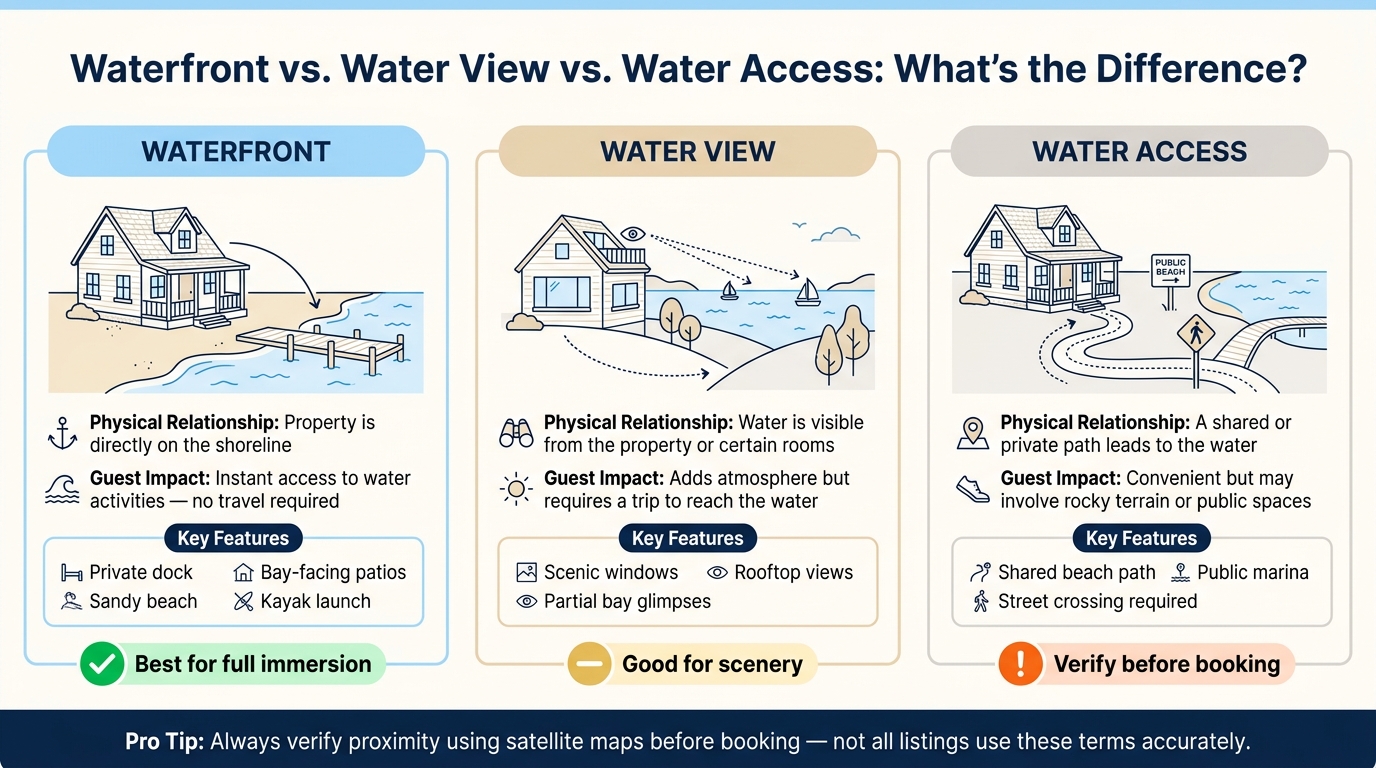
When a property claims to be "waterfront", it should mean exactly that. The bay or body of water should be right there - no roads to cross, no distant views from a rooftop. "Waterfront" means stepping outside and being immediately greeted by the water. On Cape Cod, the difference between being on the bay and just near it can completely change your experience. Let’s break down what these terms actually mean and how they can impact your stay.
Travel listings often blur the lines between these terms, but they describe very different setups:
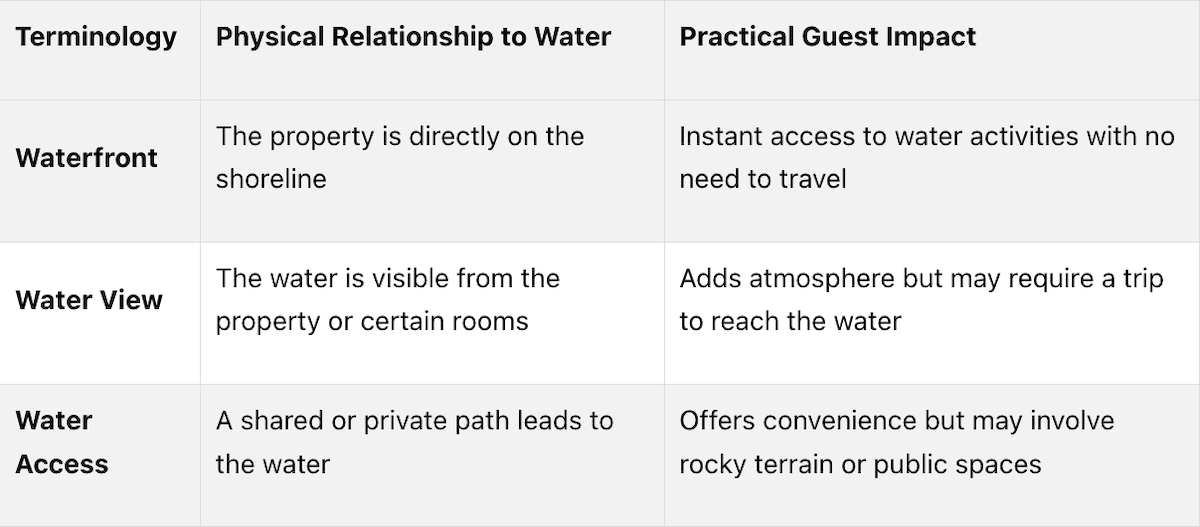
True "waterfront" means the shoreline is part of the property itself, not just something nearby or visible from a distance.
If you're seeking a waterfront B&B, it should feel like the bay is woven into every part of your stay. From the layout to the shared spaces, the property should highlight its connection to the water.
Condé Nast Traveler paints the ideal waterfront B&B as a "cedar-shingled house with white trim", complete with a "private lawn dotted with Adirondack chairs" overlooking the bay and a dock extending into the water. [4]
Look for properties where bay-facing patios, lawn seating, and unobstructed views from the rooms are standard features - not optional upgrades. For example, at A Little Inn on Pleasant Bay (alittleinnonpleasantbay.com), rooms like the Daysailer and Knockabout are designed to showcase sunrises and boat activity on Pleasant Bay. This kind of thoughtful design ensures the water feels like the centerpiece of your stay, not just a backdrop.
One important detail to clarify before booking: what kind of shoreline does the property have? A sandy beach, rocky edge, or salt marsh will each offer a different experience. If activities like swimming or kayaking are on your agenda, it’s worth confirming these details to ensure the property meets your expectations. By focusing on these elements, you’ll be able to pick a property that truly delivers the waterfront experience you’re looking for.
When it comes to finding a true waterfront experience, understanding how to evaluate bay view claims is key. Listings often exaggerate the presence of water features, so knowing how to interpret descriptions and photos can help ensure the bay isn’t just a distant glimmer. Let’s dive into the details that distinguish a genuine bay view from marketing fluff.
Photos can reveal more than the listing text ever will. The most telling images are those taken from inside the property, especially from spots like the bed or a cozy seating area. A clear, unobstructed view of the water from within the room is a strong indicator of an authentic bay view. On the other hand, if the water is visible only from a rooftop or a far-off angle, the view may not live up to expectations.
Also, examine how the property connects to the water. Features like seating areas directly facing the bay or a private dock extending into the water confirm close proximity. Todd Plummer from Condé Nast Traveler paints a vivid picture of this connection when describing A Little Inn on Pleasant Bay:
"A gently sloping driveway curls up from the waters of Pleasant Bay... to a private lawn dotted with Adirondack chairs. Overlooking the bay, you'll find a cedar-shingled house." [4]
These kinds of details in photos and descriptions help you visualize the property's relationship to the water.
The orientation of a property does more than just determine the view - it sets the tone for your entire stay. For example, an east-facing property offers the magic of watching the sunrise over the bay, creating a serene and energizing start to the day. One guest captured this beautifully:
"At sunrise it glistens like a fine diamond. At dusk, it's a painting of pinks and blues I've never seen before and takes your breath away." - Cathleen Nigro, Verified Guest [5]
If a listing highlights "sunrises over the bay", it’s a good bet that the water lies to the east and that the rooms are oriented to capture this view. On the flip side, phrases like "sunset rays from a private balcony" usually indicate a western-facing or garden-facing view. While sunsets can be stunning, they don’t necessarily mean the bay is front and center.
The language used in a listing can be a big clue about how central the water is to the property. Vague phrases like "water views available" or "near the water" often mean the bay isn’t the focal point. Descriptions that name the specific body of water, mention sightlines, or integrate the water into the experience are far more reliable.
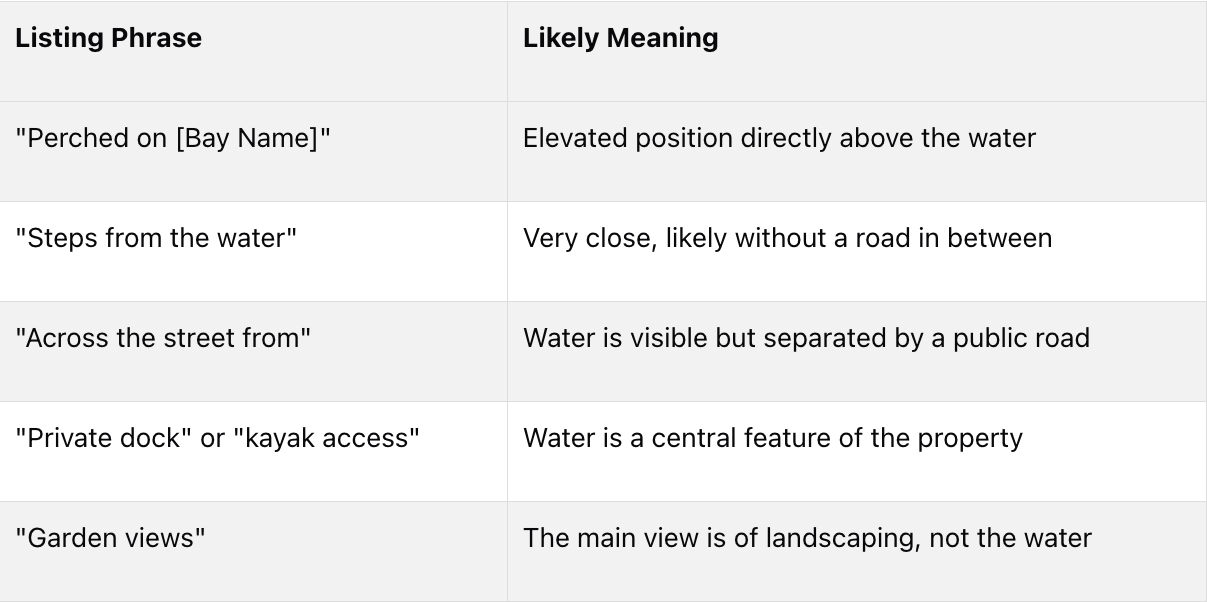
Look for phrases such as "perched on Pleasant Bay," "right from the comfort of your spacious bed," or "two steps away from soaking in sailboat views." [2] These details suggest the water is a key part of the property's design. Amenities like a private dock or kayak access, as well as room names inspired by nautical themes (e.g., Knockabout, Daysailer, or Beetlecat), also reinforce a connection to the waterfront.
Here’s a quick guide to decode listing phrases:
A water view is lovely, but being able to step right into the scene - whether it’s walking down to the shoreline, launching a kayak, or relaxing on a private dock - takes the experience to another level. Direct access lets you fully engage with the water, making it a centerpiece of your stay rather than just a backdrop.
A private dock offers something you simply can’t get from a shared beach or public marina: uninterrupted, hassle-free time by the water. There’s no need to deal with parking or crowds; you can step outside and enjoy the bay whenever you like.
At A Little Inn on Pleasant Bay, this kind of access is a key part of the experience. Guests can take advantage of complimentary boat outings, and the inn’s owners make launching kayaks and paddleboards incredibly easy. As Todd Plummer of Condé Nast Traveler described:
"The property has a small, rocky beach across the street on the bay, complete with kayaks and paddle boards, and a private dock that's great for swimming" [4].
This direct connection to the water shapes your day in a way that’s hard to replicate. Imagine starting your morning with a peaceful paddle, spending the afternoon birdwatching from the dock, and ending the day watching the sunset reflect off the bay. Having the water right at your fingertips makes these moments effortless.
To ensure you get the most out of your stay, it’s worth clarifying the details of dock access before booking.
While a private dock can elevate your waterfront experience, it’s important to confirm a few key details to make sure it meets your expectations:
When you're staying at a true waterfront property, the water isn't just a backdrop - it becomes the heartbeat of your entire experience. From the first rays of sunlight reflecting off the bay to the peaceful glow of the evening, your day naturally aligns with the rhythm of the water.
Your connection to the water begins the moment you wake up. If you're lucky enough to stay at a place like A Little Inn on Pleasant Bay, the morning light filtering through your window feels like a gentle invitation to start the day. Rooms that face east even offer the chance to enjoy a stunning sunrise without leaving your bed. It's a serene way to ease into the day, with natural light setting the perfect tone.
Breakfast might be the next highlight, especially when served in a bay-facing patio or a lush garden courtyard. As the inn aptly puts it:
"Served in the lush garden courtyard or the bay-facing patio, our breakfast is truly an 'experience' and a great way to indulge before a day of exploration." [3]
Picture yourself savoring your morning coffee while watching sailboats glide across the water. Later in the day, many waterfront properties host social hours - whether it's a casual apéro or a sherry hour - on terraces overlooking the bay. These moments of relaxation, paired with the calming presence of the water, make the experience feel timeless and anchored to the natural surroundings.
The connection to the water doesn't stop at your room. Thoughtfully designed common areas, like outdoor terraces, gardens, and even lawn seating, are often positioned to maximize the view. Whether you're enjoying breakfast, lounging on a dock, or catching the sunset from a garden bench, these spaces make it easy to immerse yourself in the beauty of the bay.
This seamless blend of indoor and outdoor spaces centered around the water creates a sense of harmony that defines a true waterfront stay. It's this constant interaction with the bay that makes a visit to a property like this feel so authentically Cape Cod.
Finding the perfect waterfront B&B on Cape Cod means looking beyond the surface. The term "waterfront" can mean different things, so it's essential to dig deeper and clarify what matters most to you. Here's how to make sure your stay truly delivers that seaside charm.
Before diving into your search, think about what you want out of your waterfront getaway. Is it all about waking up to uninterrupted bay views? Or maybe having easy access to kayaking or paddleboarding is a top priority? Perhaps you'd prefer staying near bustling towns like Chatham or Orleans for a mix of relaxation and activity.
Take, for example, the Daysailer room at A Little Inn on Pleasant Bay. It offers stunning bay views and the glow of sunrise from a king-sized bed - perfect if you're after a serene, scenic escape. On the other hand, a garden-facing room might focus more on private balconies and cozy courtyards. Knowing what you value most ensures your stay matches your expectations.
The term "waterfront" can be misleading, so don't take it at face value. Use tools like satellite maps to verify whether the property sits directly on the shoreline. Some places might advertise perks like a "private beach" or "dock", only for you to find out these features are across the street - something that can significantly alter your experience.
For instance, Condé Nast Traveler praised A Little Inn on Pleasant Bay as the "Cape Cod B&B of your coastal grandmother dreams", highlighting its gently sloping driveway that leads directly to the water [4]. This kind of detail is what sets a truly waterfront property apart from one that merely hints at it.
Once you're sure the property is genuinely on the water, consider how its design and amenities immerse you in the coastal setting.
A true waterfront property makes the water an integral part of your stay - not just something you see from your window. Look for inns that incorporate the bay into their design and everyday atmosphere. Features like patios facing the water, Adirondack chairs perfectly positioned for sunset views, or complimentary use of kayaks and paddleboards can make all the difference.
Pay attention to whether essentials like beach towels, chairs, or easy dock access are included as part of your stay. These thoughtful touches show that the inn prioritizes the waterfront experience, rather than treating it as an afterthought. When the water is central to both the design and the amenities, you know you're in for a truly immersive escape.
Staying at a property that merely mentions water is one thing, but choosing a place where the bay shapes every moment - from the first rays of sunlight to the soothing evening breeze - is an entirely different experience. This distinction can redefine your Cape Cod getaway.
A true waterfront stay doesn’t just offer a view; it immerses you in the environment. Picture starting your day with breakfast overlooking the bay or stepping onto a private dock instead of driving to a crowded public beach. Properties like A Little Inn on Pleasant Bay, located between Orleans and Chatham on Pleasant Bay, deliver this kind of experience. Recognized as the "Most Charming Bed & Breakfast in MA" at the 2023 LuxLife Hospitality Awards [3] and holding an "Excellent" rating from over 410 TripAdvisor reviews [2], this inn exemplifies what a genuine waterfront stay can offer.
"The property is perfectly positioned on the 'elbow' of Cape Cod, giving guests the full East to West skyline overlooking the bay, heavenly from sunrise to sunset!" - HG Staff Writer, The Hotel Guru [1]
Knowing what to look for - such as verified proximity to the water, rooms designed to highlight the bay, and amenities that embrace the shoreline - ensures you won’t settle for a place that only claims to be "waterfront." Every detail, from the location to the experiences it offers, creates lasting memories. When the water becomes part of your daily rhythm, each moment of your stay feels like a celebration of Cape Cod’s timeless beauty.
When determining if a B&B is genuinely waterfront, focus on whether it offers direct water access and features centered around the bay. Check for amenities like a private dock or the ability to launch a kayak directly from the property. Be sure to confirm which rooms provide bay views - not just garden views. A true waterfront property will highlight dockside perks and shoreline access in its description. If these details are missing or unclear, the property is likely near the water but not directly on it.
Cape Cod waterfront inns showcase a variety of shorelines, each offering something special. From tranquil bay waters ideal for swimming, kayaking, or paddleboarding to rocky stretches perfect for fishing or easy water access, there's something for everyone. You’ll also come across areas with salt marshes or sandy dunes, adding to the charm. If you’re considering a stay at a place like A Little Inn on Pleasant Bay, think about how the shoreline matches the activities you enjoy or the views you’d love to wake up to.
Tides play a key role in determining how accessible the dock is and how smoothly you can get in or out of the water. If you're planning to swim or kayak, it's smart to time your activities with the tides. Pleasant Bay offers calm, sheltered waters that are perfect for a relaxing swim or paddle. When the tide is right, launching and returning from the private dock becomes a breeze.
If you're looking for a peaceful and personal Cape Cod experience, now's the time to book your stay at A Little Inn on Pleasant Bay. With its quiet setting, friendly hosts, and small seasonal touches that make a big difference, it’s a great place to relax and enjoy the best bed and breakfast in Cape Cod. Whether you’re planning a weekend getaway or a longer break, don’t wait too long—anytime is the best time to visit, and rooms fill up fast.


